
DevOps: the culture of “we”, for team success

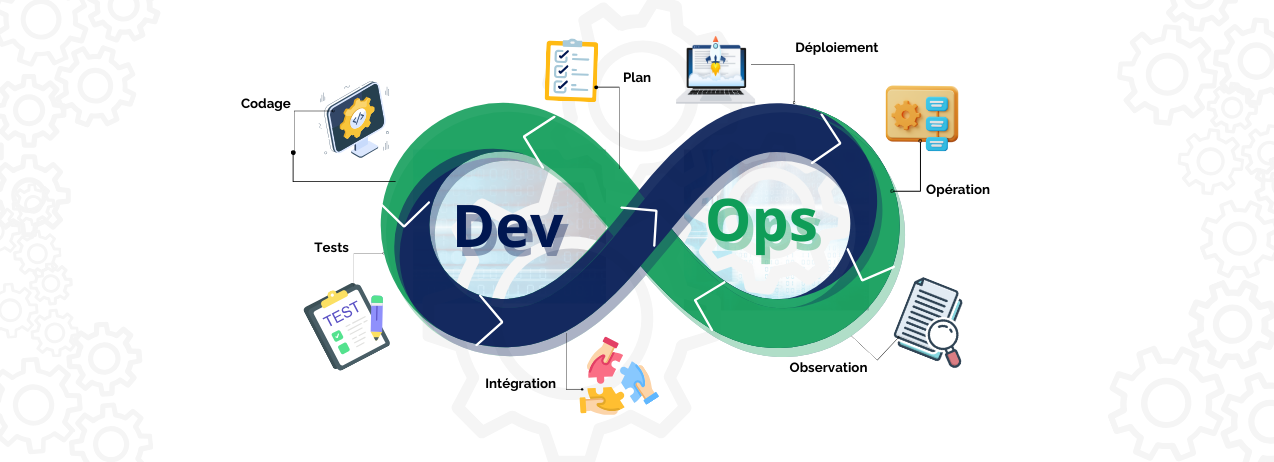
Have you ever wondered why some companies stand out from the crowd and manage to innovate at a breakneck pace? What is their secret? Do you dream of delivering quality products in record time? The answer could well be found in one word: DevOps.
This collaborative approach, which combines development, operations and security, has become essential in a world where digital technology is omnipresent.
In just a few years, DevOps has gone from an innovative concept to an absolute necessity for companies that want to stay competitive.
According to a Gartner report, before long, 90% of organizations will be using cloud services and DevOps practices.
But did you know that 96% of companies that adopted DevSecOps* saw the benefits? And that the DevOps market is growing, with an annual growth rate of more than 20%?
In this article, we will explain in detail why the DevOps approach is essential for the success of your team and how it can optimize your work processes.
*DevSecOps is a natural extension of DevOps. If DevOps emphasizes collaboration between development and operations teams, DevSecOps integrates security concerns from the start of the development cycle.
1. But what exactly is DevOps?
DevOps is a set of approaches and standards specifically assigned to software development (Dev) and systems operations (Ops) teams to improve their collaboration when creating products. More than just a methodology, it represents a cultural transformation that completely redefines industry standards and opens up new perspectives for the company.
2. Why is DevOps a “must”?
In a context where consumers' expectations for quality are increasingly high, DevOps is much more than a simple development methodology. It is true quality assurance integrated into every stage of a product's life cycle, for those who aspire to excellence and market domination. By automating tests and promoting collaboration between development and operations teams, DevOps can drastically reduce operational costs.
Paralysis by silos: a cultural heritage to overcome
DevOps disrupts traditional collaboration paradigms by breaking down organizational silos. Historically, development and operations teams operated as disjointed units, creating barriers to effective communication and collaboration. This separation often caused misunderstandings, delays and errors, slowing down the development and operation process... In addition to a slower development process and operations, the traditional culture, which was deeply held, is very resistant to certain changes.
The DevOps breath: tech is reinventing its universe
DevOps is based on a fundamental principle that is both simple and revolutionary: breaking down traditional barriers between development and operations teams. This merger creates an unprecedented synergy, where collaboration replaces internal competition. This results in a spectacular acceleration of the development cycle, from design to production.
DevOps: the tripod of technological excellence
DevOps is built on essential value pillars that disrupt traditional collaboration paradigms.

The culture of continuous improvement
Beyond tools and processes, DevOps establishes the culture of continuous improvement. Every deployment, every incident is a learning opportunity. This constant growth mentality propels teams toward excellence, fostering innovation and creative problem solving.
Automation, the keystone of efficiency
One of the pillars of DevOps is process automation. From testing to production, including infrastructure management, automation frees teams from repetitive tasks. This optimization not only results in time savings, but also in a reduction in human errors, thus ensuring consistent and superior quality.
Customer experience at the center
In the DevOps ecosystem, the customer is no longer a passive spectator, but becomes a central actor in the development process. Feedback is rapid, which allows for more frequent updates. This approach not only guarantees customer satisfaction, but also a sustainable competitive advantage.
DevOps: the art of merging development and operations
The DevOps approach completely reinvents the software production phase, from the initial idea to final development. This approach requires a well-defined strategy and key steps to successfully implement it.
Successfully implementing DevOps transforms not only technical processes, but also organizational culture, driving innovation and long-term efficiency.
3. Commitment to innovation, guaranteed success
Adopting DevOps practices brings many significant benefits to organizations, transforming not only their development and deployment processes, but also their corporate culture and relationship with customers.

Lightning delivery: revolutionize your deadlines
One of the most tangible benefits is faster time to market. By breaking down traditional silos between development and operations teams, DevOps favors close collaboration that streamlines the delivery process. Automating repetitive tasks, from code compilation to deployment, enables shorter development cycles. Continuous integration and deployment (CI/CD) pipelines facilitate frequent and reliable releases into production. This increased speed allows companies to react more quickly to market developments and user needs.
Flawless quality: the DevOps guarantee
Improved software quality is another major benefit. Integrating automated testing at every stage of development helps detect and fix bugs earlier, reducing associated costs and risks. Code review and pair programming practices, common in DevOps teams, help raise the overall level of code produced. Standardization of development, test, and production environments minimizes issues related to configuration differences, ensuring greater stability of applications in production.
From listening to action: the customer experience reinvented
Customer satisfaction is significantly improved. More frequent deployments allow new features and fixes to be brought to users quickly. This ability to iterate quickly on the product, combined with better consideration of user feedback, makes it possible to align development more closely with real market needs. Increased application stability, resulting from better code quality and more robust deployment processes, results in less downtime and a smoother user experience.
Do more with less: DevOps alchemy
Integrating DevOps practices can lead to significant cost reduction in the long term. Automating repetitive tasks frees up time for teams, allowing them to focus on higher value-added activities. Detecting and fixing bugs early reduces maintenance costs, which tend to increase exponentially when issues are discovered late in the development cycle. Optimizing cloud resources and using technologies like containers enable more efficient management of infrastructure costs. Additionally, reducing production incidents and downtime minimizes financial losses related to service interruptions.
4. Conclusion
In conclusion, adopting DevOps means welcoming the future of software development with open arms. It means choosing operational excellence, speed of execution and continuous innovation. For companies ready to take the plunge, DevOps isn't just an option, it's a trigger for technology leadership.
At AKATA GOAVANA, our experts support you step by step in your DevOps transformation, adapting our solutions to your specific needs. We put our know-how and tools at your disposal to help you achieve or even surpass your objectives. And these are not just words, they have already proven themselves. In figures, it gives:
So if you are ready to take action, contact us and we’ll talk!
5. FAQs
What is DevOps?
DevOps is an approach that aims to improve collaboration between development teams (Dev) and operations teams (Ops). By combining efforts and automating processes, DevOps helps deliver software faster, better, and more reliably.
What are the main benefits of DevOps?
How does DevOps differ from traditional development methods?
In traditional methods, development and operations teams often work in isolation, which can lead to conflicts and delays. DevOps fosters close collaboration between these teams, breaking down silos and adopting a culture of continuous improvement.
What are the most used tools in DevOps?
The most common DevOps tools include:
How do I implement DevOps in my company?
Implementing DevOps requires cultural and technical transformation. Here are the main steps:
DevOps and security, how to reconcile the two?
DevSecOps is an extension of DevOps that integrates security early in the development cycle. This helps ensure that applications are secure by design.