
How agile software development keeps you ahead of your competitors?


In the business world, agile software development stands out as an essential catalyst for propelling companies to new heights of productivity and innovation.
71% of companies use it to boost their efficiency, according to Earthweb. But what makes this method so powerful and how can you leverage it to outperform your competition?
One of the main benefits of agile software development is its ability to provide exceptional flexibility to development teams. By breaking projects into short sprints, it allows rapid adaptation to changes and the specific needs of users and customers by making continuous adjustments throughout the development process.
Shorter development cycles bring products to market faster, providing a competitive advantage to the company. In addition, the agile method stimulates perpetual communication and collaboration between teams. Each member plays their role with precision, for an exceptional final performance.
The success of agile software development also and above all relies on the technical expertise and the ability of developers to work as a team, added to this, effective project management to coordinate activities and resources. This ensures that the project is delivered on time and within specifications.
In this article, we'll discover how this brute force can turn your products into formidable weapons against the competition.
1. The importance of collaboration and communication

Imagine a team of developers working in perfect harmony, sharing ideas and solutions to create revolutionary software. This is the magic of agile development! Clearly, collaboration and communication in agile development are not just concepts, but the foundations of undisputed success.
By promoting collaborative development, the agile method allows the different stakeholders in the project to interact regularly, because it is not just a question of technology, it is above all a question of people! In agile development, we don't work alone, we collaborate. Each member of the team brings their skills and vision, for an enriched and optimized final result.
Besides, the figures speak for themselves. Teams adopting the Agile approach are on average 25% more productive than non-Agile teams.
Beyond collaboration, communication is the glue that binds the agile team. Fluid and transparent exchanges allow precise project monitoring, efficient priority adjustments and problem resolution in the blink of an eye.
Regular meetings, sharing of progress, constructive discussions and search for common solutions: agility is based on permanent dialogue.
Software engineering is also a valuable ally in this stage and is not limited to simple tools. It offers rigorous methodologies to facilitate communication, version management and task coordination.
2. Continuous improvement and innovation

9% failures: a figure which alone sums up the formidable effectiveness of the agile method. Faced with a constantly changing market, it is imperative for companies to stay ahead of the race by constantly offering new features and responding to changing user expectations.
Thanks to the frantic development cycles of this method, development teams are armed with formidable agility to satisfy pressing user requests with unrivaled efficiency.
But that's not all! It also fuels innovation by encouraging developers to explore bold ideas and instantly integrate them into the development process. This freedom stimulates team creativity and allows companies to stand out by offering industry-leading solutions.
To support this avant-garde dynamic, it is crucial to put in place robust methodologies and development processes. This is where talented software developers come in. Their technical expertise and innovative spirit are the keys that unlock the doors to success.
In short, continuous improvement and innovation are the key foundations of competitive software development. Agile provides the ideal platform to harness these two strengths and create market-leading software.
3. Effective software lifecycle management
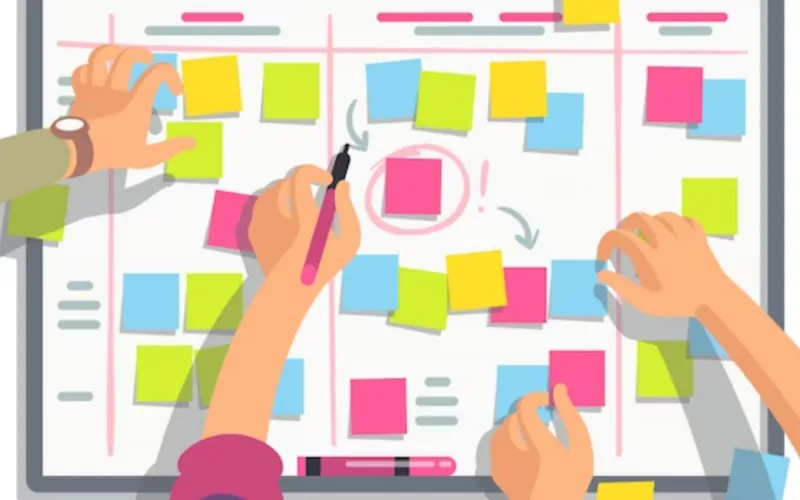
Agile software development is not a sprint, it's a marathon. A complex journey punctuated with pitfalls and challenges. Only effective software lifecycle management can get you there.
This is an essential element to remaining competitive in the market. Project management, development teams and the use of an integrated development environment are all key elements that contribute to the success of a project.
A rigorous methodology that orchestrates each step, from design to delivery, with surgical precision. Planning, monitoring, communication and coordination: the key words to guarantee optimal use of resources and compliance with relentless deadlines.
But project management is not enough. You need a strong, united and talented team. Seasoned development teams, capable of meeting all technical challenges and producing code of impeccable quality. Seamless coordination and effective management of these teams ensures the fluidity of the process, enabling agile resolution of technical challenges and production of high-quality code.
But how can we support this complex orchestration? Here's where the integrated development environment (IDE) comes into play. An extraordinary toolbox that provides them with everything they need to excel. Version management, bug tracking, real-time collaboration. It accelerates iterations, simplifies testing, and facilitates real-time collaboration, propelling productivity and creativity to uncharted heights.
Software lifecycle management encompasses all stages of the process, from initial design to maintenance and regular updating of the software, because frozen software is software doomed to failure.
Mastering the software life cycle is not an option, it is a necessity. It's the key that opens the door to success, providing you with superior software, an undeniable competitive advantage and increased profitability.
4. Conclusion
This detailed exploration has proven to us that agile software development represents a true revolution providing businesses with a powerful arsenal to outperform their competitors. With its short development cycles and rapid adaptability, development teams can effectively respond to the changing needs of users and customers. Collaboration and communication are also formidable weapons of the agile method, catalyzing innovation and creating incredible solutions.
And let’s not forget effective software lifecycle management, that foolproof strategy that propels you to a colossal competitive advantage. Rigorous planning, talented development teams, and a performing integrated development environment ensure superior software that stands the test of time.
And you, what concrete examples of the positive impact of the agile method have you observed within your company? Share your successes and experiences in the comments and let’s discuss this revolution that is shaking up the world of software development!
5. FAQs
How software development can help you get ahead of your competitors?
Agile software development is an essential tool for maintaining your competitive edge in the market. By adopting an agile approach, you can improve the responsiveness of your development, regularly experiment with new features, and deliver high-quality software solutions faster than your competitors.
What is collaborative software development and why is it important?
Collaborative software development is an approach that promotes collaboration between the different stakeholders in a software development project. It allows developers, users and project managers to work together to design and develop software solutions that meet specific user needs. This approach promotes effective communication and a better understanding of project requirements, leading to more satisfactory results.
How does software development drive innovation?
Agile software development promotes innovation by enabling the regular creation of new features and encouraging continuous improvement of existing software. This approach allows developers to take on new challenges and explore new ideas, which promotes the emergence of innovative solutions.
What are the benefits of effective software lifecycle management?
Effective software lifecycle management is essential to ensure the success of a software development project. It allows for better resource planning, effective coordination of development teams and consideration of user needs throughout the process. In addition, effective management of the software life cycle facilitates maintenance and updates, guarantees the stability of the software over time and makes it possible to follow technological developments.
How to guarantee the success of a software development project?
To ensure the success of a software development project, it is important to follow software development best practices, such as using agile methodologies, documentation, effective project management, use of appropriate development tools, and close collaboration between different stakeholders. By ensuring you clearly define project requirements, meet deadlines and budgets, and regularly evaluate performance and user feedback, you maximize your chances of success.